Arctis Pro Wireless First Look: Unboxing and Impressions
Category: Audio
Introduction
The Arctis Pro Wireless arrives as SteelSeries' premium answer for gamers and media enthusiasts who want wireless convenience without compromising audio fidelity. This first-look article walks through the unboxing experience, initial setup, and hands-on impressions, then evaluates the headset across the real-world use cases buyers typically care about: comfort for long sessions, sound quality for games and music, microphone clarity for voice chat and streaming, battery behavior for extended play, and flexibility across platforms.
The goal is not to be a spec sheet but to provide a practical editorial view that helps potential buyers decide whether the Arctis Pro Wireless fits their needs. Where relevant, the review notes manufacturer claims and typical user-reported outcomes so readers can weigh expectations against real-world behavior.
Unboxing and First Impressions
Packaging and presentation
SteelSeries packages the Arctis Pro Wireless in a tidy, protective box that prioritizes accessibility. The accessories are arranged so that the headset is the first thing encountered; the base station and peripherals are tucked into compartments beneath. The unboxing communicates a premium positioning—matte finishes, compact foam trays, and clearly labeled components make setup straightforward.
Box contents
- Arctis Pro Wireless headset (with retractable ClearCast microphone)
- Wireless base station / transmitter with input/controls
- Two rechargeable batteries and a charging dock/slot on the base
- USB/charging cable(s) and power adapter
- Quick start guide and warranty information
Exact accessory bundles can vary by region and retail package, but a dual-battery setup and the transmitter base are the defining inclusions that separate this headset from simpler single-battery wireless models.
Design, Build and Comfort
At a glance, the Arctis Pro Wireless continues SteelSeries' recognizable aesthetic: a minimal, gaming-friendly silhouette with a ski-goggle style headband and oval ear cups. The construction mixes metal reinforcement in the frame with soft-touch plastics and breathable cloth ear cushions.
Comfort is one of the Arctis strengths. The elastic suspension strap follows head contours and distributes weight evenly to reduce pressure on the crown. The earcup padding is ample and breathable, making long sessions—multiple hours of competitive play or extended listening—more comfortable than many clamped, faux-leather alternatives.
Build quality feels solid. Moving parts such as the headband adjustment and the retractable microphone have a durable, well-engineered feel. The transmitter base adds a functional, stable hub for controls and charging; its presence makes the headset feel like part of a small desktop system rather than a shipping-box accessory.
Setup and Connectivity
Initial setup is designed for simplicity: plug the base station into a PC or console as applicable, insert a charged battery into the headset, and pair the headset to the transmitter. The base station acts as the primary hub for 2.4 GHz wireless audio and often provides a simultaneous Bluetooth connection so users can accept phone calls or play streamed audio in the background.
Connectivity highlights to expect:
- Dual wireless paths: a low-latency 2.4 GHz link for primary game audio and a Bluetooth link for secondary devices such as phones.
- Platform flexibility: PC, consoles and mobile devices can be accommodated, though exact connection methods (USB, optical, aux) depend on the console and the specific bundle.
- Controls at the base: the transmitter provides hardware controls for volume, source selection and chat/game balance on supported models.
Users who value fuss-free connectivity—plug-and-play with minimal driver hassle—will find the base station approach convenient. Those who need a purely mobile, pocketable headset will prefer simpler Bluetooth-first designs; the Arctis Pro Wireless is optimized for desktop and living-room setups.
Sound Quality and Performance
On first listen the Arctis Pro Wireless presents a clear, detailed signature that leans toward a balanced and slightly analytical tuning. This makes it a versatile performer across different content types.
Shop the latest Audio & Headphones picks on Amazon.
See Deals →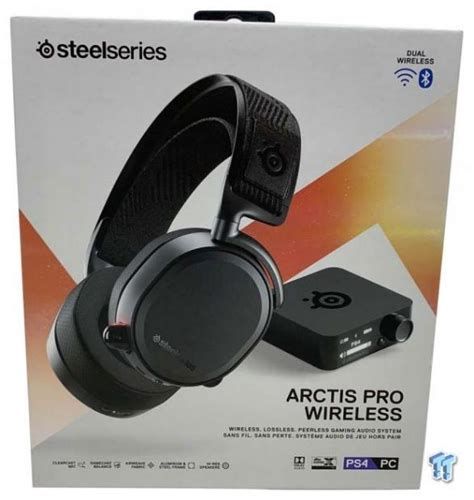
For gaming, positional cues are distinct and the soundstage is convincing for headphone listening, which helps with spatial awareness in competitive titles. Explosions and low-frequency effects have weight without overwhelming dialogue or footsteps, which is important for playstyles that require hearing subtle cues.
For music, the headset produces clean mids and articulate highs. Audiophile-level listeners who demand flat, reference-room accuracy may choose a dedicated wired DAC/amp setup, but the Arctis Pro Wireless is capable enough for most listeners who want both gaming and music performance from one headset. The presence of a high-performance DAC in the base station (on models that include one) is a notable advantage compared with many purely wireless solutions.
Voice and cinematic content benefit from the headset's clarity; vocals remain intelligible at high volumes. Users who plan to do a lot of music listening should spend time with the equalizer options in the companion software to tune low-end and treble to taste.
Microphone and Voice Communication
SteelSeries' retractable ClearCast microphone aims to strike a balance between broadcast-grade clarity and practical convenience. The mic folds away neatly when not in use and pulls out to a position close to the mouth when needed.
In voice-chat tests, the mic reproduces speech with warmth and clarity while rejecting some ambient noise thanks to its directional pattern. For streamers and content creators, the microphone performs well for group voice chat and streaming when combined with moderate input gain and software processing. Users seeking professional-grade streaming audio may still prefer a dedicated XLR microphone, but for in-game chat, Discord calls, and casual streaming the Arctis Pro Wireless is more than adequate.
Battery, Base Station, and Practical Features
One of the headline features is the dual-battery system. Because batteries are swappable and charged via the base station, the practical effect is near-continuous operation: one battery powers the headset while the other charges in the dock. This design removes the anxiety of running out of power mid-session and is especially useful for long streams, LAN events, or extended multiplayer sessions.
Manufacturer battery claims should be read as a guideline; real-world battery life varies with volume, Bluetooth usage, and environmental factors. Some users prefer to carry a spare charged battery for travel or events where a power source for the base station isn’t convenient.
The base station is more than a charger: it functions as the wireless transmitter, remote control and, on certain variants, an inline DAC/amp. Having hardware controls for input selection and chat/game balance is a real-world convenience that reduces dependence on on-screen or software controls during intense sessions.
Software and Customization
SteelSeries Engine (the companion app) provides EQ presets, a graphic equalizer and profile management. For users who like to fine-tune sound for specific games or music genres, the software is an important part of the package. Profiles can be saved and recalled, which is handy when switching from competitive FPS to music-focused listening.
Updates for firmware and the base station also occur through the software. While many users will appreciate the granular control, those who prefer a completely hardware-driven experience can still get a strong out-of-box experience without deep software interaction.
Real-World Use Cases
Different buyers have different priorities. Here are practical takeaways based on common real-world scenarios:
Looking for the best Audio & Headphones deals on Amazon?
See Deals →- Competitive gamers: Low-latency 2.4 GHz audio and a clear midrange support quick target acquisition and voice clarity. The base station’s hardware controls and hot-swap batteries reduce distractions during long sessions.
- Streamers and content creators: Good on-headset mic quality and the ability to mix Bluetooth audio for phone calls or background music are useful. For audio-critical streaming, pairing with an external microphone remains a valid option.
- Casual gamers and multimedia users: The balanced tuning and Hi-Res-friendly design make the headset a capable all-rounder for games, movies and music.
- Frequent travelers or console-first users: The reliance on a base station and the headset’s desktop bias mean this isn’t the most travel-friendly option; however, the swappable-battery design does help for long-haul flights if the base is available at origin and destination.
Pros & Cons
- Pros:
- Excellent real-world versatility—good for gaming, streaming and music.
- Dual-battery, hot-swap system removes single-battery anxiety.
- Low-latency 2.4 GHz wireless link with simultaneous Bluetooth for phone/connectivity multitasking.
- Comfortable for long sessions thanks to suspension headband and breathable ear cushions.
- Transmitter/base station provides hardware control, charging and (on some models) a high-quality DAC.
- Cons:
- Premium price puts it out of reach for budget-focused buyers.
- Desktop/console setup with base station is less portable than simpler Bluetooth-only headsets.
- Some users may prefer a dedicated external microphone for professional streaming.
- Software experience can be necessary for best tuning—out-of-box may require EQ adjustments to match personal tastes.
Comparison Table
| Feature | Arctis Pro Wireless | Arctis 7 | Arctis Pro + GameDAC |
|---|---|---|---|
| Wireless | 2.4 GHz + Bluetooth (simultaneous) | 2.4 GHz only | Wired (USB + optical), no wireless |
| Swappable Batteries | Yes | No (internal) | No |
| Included Base/Transmitter | Yes (charging, controls, DAC on some bundles) | No (USB dongle) | Yes (external DAC/amp) |
| Focus Use | Desktop/streaming + console | Wireless gaming on a budget | High-resolution wired listening & gaming |
| Best for | Users wanting premium wireless features and continuous play | Users wanting solid wireless value | Users prioritizing audio fidelity over wireless freedom |
Buying Guide
When considering the Arctis Pro Wireless, potential buyers should weigh a few practical questions:
1. Is wireless freedom a must?
If a clean desktop and freedom from cable drag matter most, the Arctis Pro Wireless is compelling. The trade-off is dependence on the base station and slightly more complex setup than simple Bluetooth headsets.
2. How important is uninterrupted play?
The swappable battery system is a standout feature. For streamers, marathon sessions, or LAN events, the ability to hot-swap batteries is a real convenience. If sessions are short and convenience trumps longevity, the battery system may be less critical.
3. Will the headset be used for music as well as gaming?
The Arctis Pro Wireless leans toward balanced, detailed sound that handles music well. Buyers who are strict audiophiles should consider a wired DAC/amp solution, but many users will find the Arctis Pro Wireless an excellent compromise between convenience and fidelity.
4. Platform compatibility
Confirm how the base station connects to the primary platform (PC, PlayStation, Xbox, Switch). Some consoles require different cables or workarounds. When buying, check that the chosen bundle contains the needed connectors for the intended platform.
5. Microphone and content creation needs
The ClearCast mic is strong for voice chat and casual streaming. For professional-level production, plan for a dedicated microphone with an audio interface, but know that the Arctis mic is more than adequate for Twitch streamers and conference calls.
6. Budget and long-term value
The Arctis Pro Wireless sits in a higher price tier. Evaluate whether the dual-battery convenience, base station DAC and simultaneous Bluetooth justify the investment over less expensive, single-battery or wired alternatives.
Conclusion
The Arctis Pro Wireless makes a convincing case for buyers who demand wireless convenience without sacrificing audio clarity and desktop-grade features. Its dual-battery system, robust build, comfortable fit and feature-rich base station address the most common pain points for serious gamers and streamers: battery anxiety, control accessibility, and multi-device workflows.
It is not a one-size-fits-all solution. Portability-oriented buyers or strict audiophiles with dedicated studio setups may prefer a different approach. However, for users who want a premium, flexible headset that performs well in competitive gaming, streaming and everyday media listening, the Arctis Pro Wireless is a strong contender that balances practical engineering with sound quality and comfort.