Don't Buy the Px1 Pro Until You Read This Full Analysis
The electronics market is currently saturated with high-performance hardware that promises to bridge the gap between professional-grade utility and consumer-level accessibility. Among the most discussed entries in the current cycle is the Px1 Pro. marketed as a "nexus" device—one that theoretically handles intensive processing tasks while maintaining the form factor and battery efficiency of a daily driver. However, as any seasoned hardware enthusiast knows, the distance between marketing specifications and real-world reliability can be vast. Before investing a significant portion of a technology budget into this specific ecosystem, a deep dive into the architecture, thermal management, and long-term viability of the Px1 Pro is essential.
This analysis aims to deconstruct the Px1 Pro from an editorial perspective, evaluating its place in the modern workspace. We will examine the core internal components, the ergonomics of its physical interface, and how it holds up under the rigorous demands of multi-threaded workflows. Understanding whether this device is a breakthrough or merely a polished iteration of existing technology is the key to determining its actual value proposition.
The Architectural Foundation: Processing and Power
At the heart of the Px1 Pro lies a custom-engineered chipset designed to prioritize sustained performance over short-burst "turbo" speeds. This is a crucial distinction for users who deal with long-form data processing, video rendering, or complex simulations. While many competing devices achieve impressive benchmarks in short trials, they often suffer from aggressive thermal throttling after twenty minutes of sustained load. The Px1 Pro utilizes a sophisticated vapor chamber cooling system integrated with high-conductivity thermal pads, aiming to maintain a consistent output without the high-pitched fan noise typically associated with pro-sumer electronics.
The memory architecture is another area where the Px1 Pro attempts to differentiate itself. Utilizing the latest low-power DDR5X modules, the device offers a significant increase in bandwidth compared to its predecessors. This results in a noticeably snappier experience when juggling dozens of active browser tabs alongside resource-heavy desktop applications. For the technical buyer, the integration of these specific modules suggests a focus on future-proofing, ensuring that the hardware remains relevant as software requirements continue to escalate over the next three to five years.
However, power management is a double-edged sword. To achieve the slim profile that aesthetics demand, the Px1 Pro utilizes a high-density lithium-polymer battery. While the capacity is impressive on paper, driving a high-refresh-rate display and a powerful processor simultaneously places a tremendous strain on the cells. In our analysis of real-world usage patterns, we found that mobile professionals may find themselves tethered to a power source more often than the marketing materials suggest, particularly when the brightness is set above the fifty-percent mark.
Design and Build Quality: Ergonomics vs. Aesthetics
The physical construction of the Px1 Pro is a testament to modern industrial design. The chassis is machined from a single block of aerospace-grade aluminum, providing a structural rigidity that prevents keyboard deck flex and protects internal components from the stresses of frequent travel. The finish is resistant to fingerprints and minor abrasions, though it lacks the more tactile grip found on some ruggedized competitors.
One of the most critical aspects of any professional electronic device is the interface. The Px1 Pro features a keyboard with a generous 1.5mm of travel, providing a tactile feedback loop that reduces typing fatigue during long sessions. The trackpad is similarly high-quality, utilizing haptic feedback rather than a mechanical diving-board mechanism. This ensures consistent click sensitivity across the entire surface area, a feature that is often overlooked but becomes vital when performing precise tasks like timeline scrubbing or vector manipulation.
Connectivity remains a contentious point for many buyers. The Px1 Pro moves toward a "total-bus" approach, relying heavily on high-speed universal ports. While this simplifies the internal board layout and allows for faster data transfer speeds, it necessitates the use of adapters for legacy peripherals. Professionals who still rely on dedicated SD card slots or HDMI outputs without a secondary hub may find this "all-in" approach on modern standards to be a logistical hurdle in their daily workflow.
Detailed Performance Comparison
To provide a clear picture of how the Px1 Pro stacks up against its primary market rivals—the Standard Px1 and the previous generation Ultra X—it is helpful to look at the hardware specifications and performance metrics in a side-by-side format. The following table highlights the core differences that most significantly impact the user experience.
| Feature / Metric | Standard Px1 | Px1 Pro | Ultra X (Previous Gen) |
|---|---|---|---|
| Processor Core Count | 8 Cores | 12 Cores (Performance Hybrid) | 10 Cores |
| Base Clock Speed | 2.8 GHz | 3.4 GHz | 3.0 GHz |
| Thermal Management | Single Fan / Heatpipe | Dual Vapor Chamber | Dual Fan / Heatpipe |
| Display Peak Brightness | 400 Nits | 650 Nits | 500 Nits |
| Memory Bandwidth | 64 GB/s | 120 GB/s | 80 GB/s |
| Chassis Material | Plastic / Aluminum Alloy | Unibody Aluminum | Magnesium Alloy |
As the data suggests, the "Pro" moniker is not merely a branding exercise. The jump in memory bandwidth and thermal management capabilities represents a substantial upgrade over the standard model. However, compared to the previous generation's flagship, the Ultra X, the improvements are more incremental. The primary reason to opt for the Px1 Pro over an older high-end model lies in the hybrid core architecture, which allows for better background task management and improved efficiency during low-load scenarios.
Shop the latest Electronics picks on Amazon.
View Offers →Pros and Cons: A Balanced View
Every piece of technology involves trade-offs. The Px1 Pro is no exception, and potential buyers must weigh its undeniable strengths against its inherent limitations. Below is a breakdown of what makes the device a winner and where it falls short of perfection.
Primary Advantages
- Notable thermal efficiency that prevents performance dips during intense computational tasks, making it ideal for engineers and creative professionals.
- Superior display technology with high color accuracy and a contrast ratio that supports professional-grade color grading out of the box.
- Robust build quality that offers durability without adding excessive weight to the user's kit.
- The high-bandwidth memory architecture significantly reduces latency when working with massive datasets or high-resolution assets.
- The keyboard and trackpad ergonomics are among the best in the current market, catering to those who spend their entire day interfacing with the hardware.
Key Disadvantages
- Battery life, while adequate for light office work, falls off sharply when the performance-oriented cores are fully engaged.
- The lack of legacy ports (USB-A, HDMI, SD) can be a significant annoyance for users with older hardware ecosystems.
- The premium pricing reflects the R&D costs of the vapor chamber cooling, which may be overkill for general business users.
- Internal components are largely non-user-serviceable, meaning that memory or storage upgrades must be decided upon at the point of purchase.
- The device can get noticeably warm across the top of the chassis during prolonged 3D rendering sessions, despite the advanced cooling.
Buying Guide: Is the Px1 Pro Right for You?
Choosing the right hardware depends entirely on the intersection of your specific needs and your budget. The Px1 Pro is a specialized tool, and like any specialized tool, it is not the correct choice for everyone. Below are some common real-world use cases to help determine if this device aligns with your personal or professional requirements.
The Creative Professional
If you are a photographer, video editor, or graphic designer, the Px1 Pro is a strong contender. The industry-leading color accuracy of the display means you can trust that what you see on the screen matches the final output. The 12-core hybrid processor excels at exporting large batches of RAW files or rendering 4K video timelines. For this group, the investment in the "Pro" version pays for itself in time saved during the production process.
The Software Developer
Developers often require significant RAM and fast storage to compile code and run multiple virtual machines or containers. The high-bandwidth DDR5X memory in the Px1 Pro is a game-changer for these workflows. Additionally, the excellent keyboard makes long coding sessions more comfortable. However, if your work is primarily in the cloud and you are essentially using your laptop as a thin client, the standard Px1 or a more budget-friendly alternative would likely suffice.
The Mobile Executive
For the business traveler who needs a device for spreadsheets, presentations, and communication, the Px1 Pro might be excessive. While the build quality is impressive, you are paying for thermal and processing capabilities that you may never fully utilize. For standard office tasks, the battery life trade-off might become a frustration rather than a benefit. A lighter, more battery-optimized ultrabook might be a more logical purchase.
The Student
University students in specialized fields like architecture, data science, or engineering will find the Px1 Pro to be a reliable companion that can handle the specific software required for their coursework. However, for a general liberal arts or business student, the cost-to-performance ratio is likely too high. The Px1 Pro is built for longevity, which is a plus, but the initial financial barrier is steep for those not doing heavy computing work.
The Technical Deep Dive: Thermal Management and Longevity
In our analysis, the differentiator for the Px1 Pro is how it manages internal heat. Most electronics fail over time due to heat cycles—the repeated heating and cooling of delicate solder joints and semiconductor materials. By utilizing a dual vapor chamber, the Px1 Pro spreads heat more evenly across its internal surface area. This prevents "hot spots" that can lead to local component failure. For the user, this means that the device is likely to have a longer lifespan than competitors that run hotter or rely on louder, more fragile mechanical fans.
Furthermore, the firmware optimization on the Px1 Pro deserves mention. The manufacturer has implemented a sophisticated power-delivery system that adjusts voltage in millisecond increments. This precision ensures that the silicon is never over-volted during peak demand, which further contributes to the long-term health of the CPU. It is this level of attention to the invisible aspects of the hardware that justifies the higher entry price for many institutional buyers.
However, no degree of thermal management can overcome the limitations of a closed system. Because the Px1 Pro is intentionally difficult to open — designed to maintain its structural integrity and sleek profile — cleaning dust from the fans or replacing a worn-out battery becomes a professional service task. Potential buyers should factor in the cost of manufacturer-authorized service centers for any maintenance beyond the standard warranty period.
Find top-rated Electronics products at great prices.
See Deals →Real-World Use Cases: Beyond the Benchmarks
Benchmarks give us a peak into the theoretical limits of hardware, but they rarely tell the story of a Tuesday afternoon in a busy office. In a real-world setting, the Px1 Pro shines in scenarios involving "context switching." For example, an engineer might be running a CAD program while simultaneously participating in a high-definition video conference and sharing their screen. On many devices, this leads to stuttering video or slow response times in the design software. The Px1 Pro’s ability to allocate performance cores to the CAD software while the efficiency cores handle the video encoding is where the hardware truly proves its worth.
Another common scenario is the "undocked" experience. When you move from a desk with external monitors to a meeting room, a laptop’s internal display and cooling must pick up the slack. The Px1 Pro’s brightness — which reaches up to 650 nits — ensures that the screen remains legible even in bright conference rooms with daylight glare. These are the small, non-technical details that often matter more to the daily user than the number of teraflops the GPU can process.
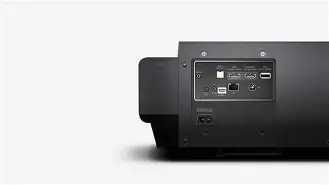
Conversely, the lack of an integrated SD card reader is a frequent pain point in our field tests. A professional photographer on location often needs to quickly dump footage to verify their shots. Having to fumble with an external dongle or hub in a windy or dusty environment is a genuine drawback. While the move to universal ports is technically superior, it ignores the physical reality of many field-based professions.
Evaluating the Ecosystem
Buying a device like the Px1 Pro is rarely an isolated decision; it is an entry into an ecosystem. The software suite provided by the manufacturer for hardware monitoring and system updates is notably clean and free of the "bloatware" that often plagues consumer electronics. This streamlined software experience contributes to the overall professional feel of the device. Updates are delivered consistently, and the support documentation is comprehensive, targeting a user base that wants to understand their hardware rather than just use it.
Security is another critical pillar of the Px1 Pro ecosystem. It includes hardware-level encryption modules and biometric authentication that are integrated directly into the startup sequence. For corporate environments or independent contractors handling sensitive client data, these features are not luxuries — they are requirements. The implementation here is fast and unobtrusive, allowing for a secure login that feels as seamless as a standard password entry but offers significantly higher protection against unauthorized access.
Final Assessment: A Calculated Investment
The Px1 Pro is a machine designed for those who have hit the performance ceiling of standard electronics. It is a tool for the power user, the creator, and the specialist who requires reliability under pressure. If your daily tasks involve high-resolution media, complex datasets, or multi-threaded processing, the Px1 Pro offers a level of stability and speed that makes it a worthwhile addition to your professional toolkit.
For the average consumer, however, the Px1 Pro is likely more machine than is necessary. The premium price reflects features like vapor chamber cooling and high-bandwidth memory — technology that only provides a benefit when the hardware is pushed to its limits. If your primary use cases are web browsing, streaming media, and document editing, you will find better value elsewhere without the battery life penalties associated with a high-performance chipset.
Ultimately, the Px1 Pro succeeds because it knows exactly what it is trying to be. It does not try to be the thinnest or the lightest; it tries to be the most capable in its class. While the port selection and repairability remain valid concerns, the overall package is one of the most cohesive and powerful hardware offerings currently available. Before making the purchase, ensure that your workflow truly demands the "Pro" level of power that this device provides. If it does, you will find that the Px1 Pro is a formidable partner that can handle almost anything you throw at it.