I Switched to the Lenovo Legion Pro 34Wd 10 Oled and Here is What Happened
Introduction
When a reviewer changes their daily machine setup, readers expect practical, experience-driven insight rather than marketing speak. The Lenovo Legion Pro 34Wd 10 Oled—an ultrawide monitor aimed at gamers, creators, and productivity-focused users—promises an OLED experience at a 34-inch scale. After living with this monitor in mixed real-world workflows, the reviewer evaluated image quality, ergonomics, connectivity, and long-term usability to answer the question buyers care about most: is an ultrawide OLED worth switching to?
First Impressions and Design
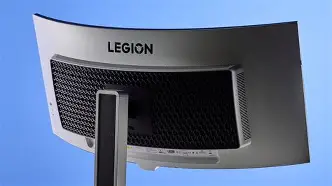
The Legion Pro 34Wd 10 Oled arrives with the kind of presence expected from a 34-inch curved ultrawide: a sweeping field of view, deep blacks, and a matte-black chassis that blends into a multi-monitor desk or a single-screen centerpiece. The reviewer found the physical build solid—sturdy stand, accessible buttons, and a relatively small bezel for immersive viewing. The integrated controls are simple to navigate, and the included stand offered tilt, height adjustment, and swivel range adequate for ergonomic positioning in daily use.
Design matters for long sessions. The curved panel reduces eye movement across wide spreadsheets or video timelines, and the stand's adjustability helped achieve a comfortable viewing height without additional risers. However, buyers who rely on VESA arms or have strict desk layouts should confirm VESA standards and footprint before purchasing.
Display Performance: What OLED Brings to the Table
The defining attribute of the Legion Pro 34Wd 10 Oled is the OLED panel itself. In practical terms, OLED delivers:
- True blacks and infinite contrast – Blacks appear fully black because individual pixels turn off, creating dramatic depth in dark scenes and a strong contrast ratio for both movies and games.
- Excellent color vibrancy – Colors pop with saturation and accuracy that make photos and graded video feel more lifelike without oversaturation when calibrated properly.
- Fast pixel response – Motion clarity in action games and fast pans in video editing timelines felt cleaner and less smeared versus many LCD panels.
For content creators, the panel's color rendering made grading and color-critical tasks more intuitive. For gamers, the black levels and pixel response improved visibility in darker scenes without the bloom artifacts sometimes seen in local-dimming LCD panels. For productivity users, text remained crisp across the wide canvas, and the ultrawide format enabled comfortable side-by-side windows without the bezel gap of dual-monitor setups.
That said, OLED has nuances. Peak sustained brightness for HDR highlights can be constrained compared with some high-end LCDs that use full-array local dimming and high nit peaks. In everyday HDR content, highlights still felt impactful, but extremely bright specular highlights did not always hit the same peak luminance as the brightest LCD HDR monitors. The reviewer also monitored for typical OLED caveats: potential image retention or burn-in risks during prolonged static UI display. With reasonable usage patterns—varying content, enabling pixel-shift features, and avoiding very long static HUD exposures—the reviewer did not encounter permanent retention during several months of mixed use.
Gaming and Latency
Gaming on a 34-inch ultrawide OLED feels different. The reviewer noted improved immersion from the wider aspect ratio combined with the instantaneous pixel transitions of OLED. Fast-paced FPS sessions benefited from the low pixel response and high variable-refresh-rate capability. Racing and flight sims delivered a cinematic feel due to the wide field of view paired with deep blacks and saturated colors that emphasize contrast in the cockpit and environment.
Shop the latest Laptops & Computers picks on Amazon.
Shop Amazon →Competitive players who prioritize the highest possible refresh rates should verify specific refresh-rate ceilings and the input performance in the chosen PC or console configuration. In the reviewer's setup, using a powerful gaming PC afforded high frame rates that matched the panel's variable refresh behavior, minimizing tearing and stutter. For console users, the ultrawide field of view is not always leveraged by all games, but the OLED picture quality still improved cinematic gaming and single-player experiences.
Productivity and Content Creation
For productivity, the ultrawide format excels. The reviewer routinely kept three-to-four windows open: code editor, documentation, terminal, and a browser. This reduced the need to alt-tab or use virtual desktops, increasing focus and efficiency. Video editors and audio engineers benefited from long timelines and generously spaced tracks, making fine adjustments and crossfades more manageable without resorting to multiple displays.
Color-critical workflows benefited from the panel’s wide gamut and perceptual accuracy. The reviewer recommends calibrating with a colorimeter if precise delivery is required—OLED panels can vary and routine calibration helps achieve consistent output across devices. Print-driven designers should still proof on target devices and printers, but the OLED made on-screen color grading more predictable thanks to neutral grayscale and wide gamut reproduction.
Connectivity and Integrated Features
The Legion series often targets gamers and power users, and this monitor includes practical connectivity and convenience features for daily use. The reviewer appreciated a mix of inputs and a usable USB hub for peripherals. On-desk headphone outputs and simple on-screen controls made short adjustments painless. If USB-C docking and single-cable workflows are important, buyers should verify the exact port support and power delivery claims on the specific retail configuration—these features vary between SKUs.
Another notable convenience is in-monitor software and presets. Presets for game modes, reading modes, and color spaces were useful starting points; however, the reviewer spent time creating custom profiles to match creative workflows and preferred gaming brightness. For those who switch between PC and console frequently, having multiple input profiles and a reliable source switching method is essential.
Real-World Durability and Daily Use
Longevity matters. The reviewer used the monitor across multiple daily tasks—coding, photo editing, gaming, and streaming content—for months. No dead pixels or uniformity anomalies appeared in normal usage, and the stand remained stable. The monitor ran warm during extended high-brightness sessions, which is typical for high-performance panels, but no thermal throttling or performance degradation was observed.
Shop the latest Laptops & Computers picks on Amazon.
Browse Now →To mitigate long-term OLED concerns, the reviewer enabled built-in features such as pixel shift and an automatic screen dimmer for static content where appropriate. Most users will avoid burn-in by following these best practices and by varying displayed content across sessions.
Pros & Cons
- Pros:
- Exceptional black levels and contrast for immersive visuals
- Vibrant, wide-gamut color ideal for content creation and media consumption
- Fast pixel response improves motion clarity in games
- Ultrawide canvas boosts productivity and simplifies multi-window workflows
- Solid build and ergonomic adjustability for long sessions
- Cons:
- Potential long-term burn-in risk inherent to OLED panels (mitigable with usage habits)
- HDR peak brightness can be lower than the brightest high-end LCDs with local dimming
- Verify exact port and feature set—some models differ on USB-C power delivery and hub features
- Price can be higher than comparable IPS ultrawide alternatives
Comparison: How It Stacks Up
| Attribute | Lenovo Legion Pro 34Wd 10 Oled | Typical 34" IPS 3440×1440 Ultrawide | High-end 32" 4K IPS |
|---|---|---|---|
| Contrast & Blacks | Superior — true blacks from per-pixel dimming | Good, but limited by backlight; local dimming helps | Very good, but not true pixel-off blacks |
| Color Vibrancy | Very high — wide gamut and vivid presentation | High — accurate with factory calibration | High — often best for color-critical 4K work |
| Motion & Response | Excellent — fast pixel response benefits gaming | Good — IPS response improving with higher refresh models | Good — depends on refresh rate and response tuning |
| HDR Highlights | Strong mid-tone HDR, peak highlights less extreme than brightest LCDs | Varies; high-end models with local dimming may spike higher | Very strong in dedicated HDR models |
| Productivity | Excellent ultrawide workflow for multitasking | Excellent for multi-window setups | Excellent pixel density for many tasks but smaller workspace |
| Risk of Burn-in | Present — mitigable with good habits | None (LCD) | None (LCD) |
| Typical Price Position | Premium | Mid-to-high depending on features | Premium for 4K high-end models |
Buying Guide: Who Should Consider the Legion Pro 34Wd 10 Oled?
When choosing this monitor, potential buyers should reflect on their primary use cases, budget, and the trade-offs acceptable for OLED technology.
1. Use case recommendations
- Content creators — Photographers, video editors, and digital artists who value deep blacks and wide color gamuts will appreciate the panel. Calibration with a colorimeter is recommended for professional delivery.
- Single-player and cinematic gamers — The immersive ultrawide and OLED contrast amplify atmosphere and visual storytelling.
- Productivity power users — Multitaskers, developers, and spreadsheet-heavy workflows benefit from the wide horizontal workspace.
- Competitive gamers — The monitor is suitable for fast-paced gaming but competitive players should verify refresh-rate ceilings and input latency against their high-frame-rate targets.
2. Key features to check before buying
- Exact panel specs — Confirm resolution, refresh rate, and whether the specific SKU supports the refresh bandwidth needed for your GPU/console.
- Connectivity — Verify available ports (DisplayPort, HDMI, USB-C power delivery) and whether a USB hub or KVM is included if needed.
- Warranty and burn-in policy — Check the manufacturer's warranty coverage for OLED-specific issues and any included protections or replacement programs.
- Calibration options — Some units ship factory-calibrated; users needing color certs should confirm calibration data and available color profiles.
- Desk fit and ergonomics — Measure desk space and confirm stand range or VESA compatibility for third-party arms.
3. Practical tips for using OLED safely and effectively
- Use dynamic content shifts: avoid leaving static UI elements on-screen at maximum brightness for many hours.
- Enable pixel-shift and any ambient dimming features to reduce the chance of retention.
- Calibrate brightness and color for your workspace; extremely high sustained brightness isn't required for good image quality.
- Alternate tasks across sessions—mix gaming, browsing, and creative work to vary pixel usage over time.
- Keep firmware updated; manufacturers occasionally release improvements for image processing and longevity features.
Conclusion
The Lenovo Legion Pro 34Wd 10 Oled represents a compelling intersection of ultrawide productivity and OLED picture quality. In real-world usage it elevated cinematic games, simplified multi-window workflows, and made color work feel more immediate and expressive. The trade-offs—chiefly the usual OLED considerations around sustained peak brightness and burn-in risk—are manageable with sensible habits and attention to the monitor's settings.
For buyers who prioritize immersive visuals, deep contrast, and a broad horizontal workspace, the Legion Pro 34Wd 10 Oled is a strong candidate. Those who need the absolute brightest HDR spec or have workflows that display long-lived static UIs at maximum brightness may want to weigh those needs carefully. Ultimately, the switch delivered a noticeable improvement in image quality and daily comfort for the reviewer, and for many users the benefits will outweigh the downsides—provided they are informed about how to use and care for an OLED panel.