I Tested the Q7Fn Q7 Q7F Qled 2018 for a Month: Here is My Verdict
The year 2018 marked a significant turning point in the battle for living room supremacy. As OLED technology continued to garner praise for its infinite contrast ratios, Samsung doubled down on its proprietary Quantum Dot technology, refining its QLED lineup to address previous shortcomings. At the heart of this strategy sat the Q7Fn (also referred to as the Q7 or Q7F in various regions), a television designed to bridge the gap between mid-range accessibility and ultra-premium performance. After spending a full month putting this display through its paces—subjecting it to everything from high-bitrate 4K HDR Blu-rays to competitive console gaming and standard midday cable broadcasts—the verdict is in. This article provides a comprehensive post-mortem on how this 2018 flagship-lite holds up, the engineering choices that define its character, and what it represents for the discerning home theater enthusiast.
The Evolution of the QLED Identity
To understand the Samsung Q7Fn, one must first understand the context of its release. In 2017, the original QLED series received mixed reviews due to its edge-lit architecture and high price points. For the 2018 iteration, Samsung focused on improving black levels, color volume, and the overall "smart" integration of the television. The Q7Fn was positioned as the sweet spot in the lineup. It lacked the full-array local dimming (FALD) found in the flagship Q9FN, yet it boasted significantly higher peak brightness and better color saturation than the entry-level Q6F. It is a television built on the premise that brightness and color vibrancy can be just as impactful as pure black levels, provided the processing is sophisticated enough to manage the light.
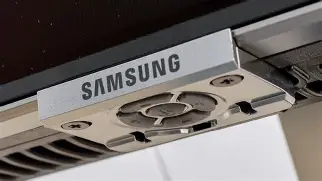
During the first week of testing, the most immediate impression was the sheer aesthetic elegance of the unit. Samsung’s "360 Design" philosophy is fully realized here. The bezels are virtually non-existent, and the metal finish of the stand and frame gives the unit a weight and presence that feels appropriately premium. However, the real star of the physical design is the One Invisible Connection. By offloading all HDMI, power, and USB inputs to a separate "One Connect" box, Samsung reduced the tether to the display to a single, thin, translucent cable. This is a game-changer for wall-mounting, allowing for a clean, museum-like installation where the hardware effectively disappears into the decor.
Picture Quality: The Power of Quantum Dots
The core of the Q7Fn experience is its VA (Vertical Alignment) panel, enhanced by a layer of Quantum Dots. In practice, this translates to a display that excels in high-brightness environments. Unlike OLEDs, which can struggle to fight off glare in sun-drenched living rooms, the Q7Fn remains remarkably legible. During afternoon testing sessions with the curtains open, the anti-reflective coating on the screen proved to be one of the best in the industry at the time. It scatters light in a way that prevents "mirroring," ensuring that the content remains the focus.
When it comes to color, the QLED technology truly shines. Samsung claims 100% color volume, and while laboratory metrics vary, the subjective experience is one of incredible richness. Reds are deep and visceral without looking "blown out," and greens possess a lifelike vibrance that traditional LED-LCDs often fail to capture. This is particularly evident in HDR content. Whether watching a nature documentary or a vibrant animated feature, the Q7Fn produces a palette that feels expansive and modern. The HDR10+ support, Samsung’s preferred dynamic metadata format, provides frame-by-frame optimization that helps the television make the most of its backlight, though the absence of Dolby Vision remains a point of contention for those heavily invested in the Apple TV or Netflix ecosystems.
Contrast and Black Level Management
Because the Q7Fn is an edge-lit display—with LEDs positioned at the bottom of the screen—managing contrast is its greatest challenge. Samsung utilizes a "Q Contrast" software solution to dim specific zones. During a month of viewing, the performance here was surprisingly competent for an edge-lit set, but it had its limitations. In a dark room, watching a movie with a 2.39:1 aspect ratio, the black bars at the top and bottom of the screen sometimes suffered from "blooming" or light bleed when a bright object appeared near the edge.
However, Samsung’s "Ultra Black" technology does a commendable job of keeping the central blacks looking deep. In "Movie Mode," the local dimming is aggressive enough to create a satisfying sense of depth. While it cannot compete with the "true black" of an OLED, it manages to provide enough shadow detail that most viewers will find the trade-off for higher brightness to be worthwhile. For those who watch mostly sports or news in a lit room, these minor black-level inconsistencies are virtually invisible.
Gaming and Motion Performance
The Q7Fn quickly established itself during my month of testing as one of the premier gaming displays of its era. This is due to two critical factors: input lag and the Variable Refresh Rate (VRR). Samsung managed to push input lag down to approximately 15ms in Game Mode, which is nearly instantaneous for a television. For competitive shooters or fast-paced platformers, the responsiveness is tangible.
Looking for the best TVs & Home Theater deals on Amazon?
View Offers →Furthermore, the 2018 QLEDs were among the first to support FreeSync, allowing the TV to synchronize its refresh rate with a compatible PC or Xbox console. This eliminates screen tearing and judder, making for an incredibly smooth experience even when frame rates fluctuate. The "Motion Plus" settings also offer a "Black Frame Insertion" (BFI) feature that increases motion clarity, though it does significantly dim the overall brightness of the screen. For sports fans, the 120Hz native refresh rate ensures that fast-moving objects like a football or hockey puck are tracked without excessive blurring or trailing.
Smart Features and User Interface
The Tizen-based Smart Hub remains one of the most intuitive interfaces on the market. Navigation is snappy, thanks to the quad-core processor. The "Ambient Mode" is a particularly clever addition that I found myself using daily. Instead of a giant black rectangle on the wall when the TV is off, Ambient Mode allows the Q7Fn to display artwork, news headlines, or even a photo of the wall behind it to make the TV "blend in." It turns the device into a piece of functional decor.
The One Remote is another highlight. It is minimalist, with very few buttons, yet it is capable of controlling almost any connected device. Through the One Connect box, the TV automatically detects connected consoles, Blu-ray players, and soundbars, often labeling them correctly and allowing the single remote to navigate their menus. This level of ecosystem integration reduces the "remote clutter" that plagues many home theaters.
Detailed Pros and Cons
After thirty days of intensive use, several clear strengths and weaknesses emerged. Here is a breakdown of what makes the Q7Fn stand out and where it falls short:
- Pro: Exceptional Peak Brightness. The Q7Fn can reach brightness levels that make HDR highlights truly pop, far exceeding what most mid-range LEDs or OLEDs are capable of.
- Pro: Unmatched Reflection Handling. The screen coating is world-class, making this an ideal choice for bright rooms with many windows.
- Pro: Gaming Excellence. With low input lag, VRR support, and Auto Game Mode, it is a formidable companion for modern gaming consoles.
- Pro: One Invisible Connection. The ability to run a single cable to the display simplifies cable management and enables professional-looking installations.
- Pro: Vibrant Color Volume. Quantum Dot technology delivers saturated, accurate colors even at very high brightness levels.
- Con: Edge-Lit Dimming Limitations. Because the LEDs are not behind the panel, there can be noticeable blooming in dark scenes, particularly with subtitles.
- Con: Narrow Viewing Angles. Like most VA panels, the color and contrast begin to degrade once you move more than 20-30 degrees off-center.
- Con: Lack of Dolby Vision. Supporters of the format will miss out on the specific metadata found on many discs and streaming services.
- Con: Thin Sound Profile. The built-in speakers are adequate for news, but they lack the low-end punch required for a cinematic experience, necessitating a soundbar.
Technical Comparison: Q7Fn vs. Competitors
To provide a better perspective on where the Q7Fn sits in the market, it is helpful to compare it to other prominent technologies and models available during its lifecycle, such as traditional IPS displays and the flagship QLED models.
| Feature | Samsung Q7Fn (QLED) | Standard High-End LED | Flagship Q9FN (FALD) |
|---|---|---|---|
| Backlight Type | Edge-Lit (Bottom) | Full-Array or Edge | Full-Array Local Dimming |
| Peak Brightness | ~1500 Nits | ~800-1000 Nits | ~2000 Nits |
| Color Tech | Quantum Dot | Standard Phosphor Layer | Quantum Dot |
| Input Lag | ~15ms | ~20-30ms | ~15ms |
| Connection | One Connect Box | On-Board Inputs | One Connect Box |
Buying Guide: Is the Q7Fn Right for You?
When considering a television like the Q7Fn, buyers should evaluate their specific viewing environment and habits rather than just looking at the spec sheet. This television was engineered for a specific type of user—one who values aesthetics, bright-room performance, and gaming responsiveness over the absolute perfect black levels required by dedicated dark-room cinephiles.
Consider Your Room Lighting
The first question any prospective buyer should ask is: "Where will this TV live?" If your living room has large windows or you prefer to keep the lights on while watching or gaming, the Q7Fn is arguably superior to many OLED options. Its ability to "cut through" ambient light is its primary selling point. Conversely, if you are building a dedicated basement theater where you will always be in total darkness, the limitations of the edge-lit dimming will be more apparent, and you might prefer seeking out a model with a full-array backlight.
Discover deals on TVs & Home Theater — updated daily.
View Offers →Analyze Your Content Consumption
For gamers, the Q7Fn remains a high-value proposition. The inclusion of VRR and the low latency makes it a "future-proof" set for its time. For those who watch a lot of HDR10+ content via Amazon Prime Video, the TV will perform beautifully. However, if your library is predominantly Dolby Vision-based, you have to decide if you are comfortable allowing the TV’s internal processing to "tone map" that content down to standard HDR10. Most users will find the results are still excellent, but purists may hesitate.
Setup and Furniture Considerations
Because of the One Connect box, the Q7Fn offers flexibility that other TVs do not. You can place your external devices (cable box, console, player) inside a cabinet up to 15 feet away from the TV itself. This is a significant advantage if you prefer a minimalist look or if your wall mounting location doesn't have a nearby shelf for peripherals. Keep in mind that the One Connect box itself is somewhat large and requires its own ventilation, so plan your cabinet space accordingly.
Real-World Reliability and Long-Term Value
One aspect often overlooked in shorter reviews is the long-term stability of the technology. Unlike OLED panels, which carry a non-zero risk of "burn-in" or permanent image retention—especially when displaying static elements like news tickers or video game HUDs for hours on end—the Q7Fn’s QLED panel is immune to this phenomenon. This makes it a "worry-free" purchase for those who leave the TV on for long stretches of time.
Over the course of the month, the software remained stable, with no significant crashes or bugs. The Tizen OS received several "over-the-air" updates that improved app compatibility and refined the Dimming Algorithm. This commitment to software support is a hallmark of Samsung's premium tiers and ensures that the TV doesn't feel obsolete shortly after purchase.
The Verdict
The Samsung Q7Fn QLED 2018 is a masterclass in compromise—but it is a compromise in the best sense of the word. Samsung’s engineers clearly identified that for the vast majority of consumers, a "perfect" television isn't just one that produces deep blacks in a dark room; it is one that looks stunning in the middle of a sunny Sunday afternoon, behaves flawlessly when a gaming console is switched on, and complements the interior design of a modern home.
While it lacks the surgical precision of the flagship Q9FN’s local dimming, it provides 90% of that experience at a more accessible price point. Its color performance is breathtaking, its smart features are genuinely useful rather than gimmicky, and its physical design remains a benchmark for the industry. If you prioritize vibrancy, brightness, and a clean setup, the Q7Fn is a stellar performer that proves there is more to a great picture than just contrast ratios. It is a well-rounded, powerful, and beautiful display that stands as a testament to the heights that LED-LCD technology can reach when pushed to its limits.